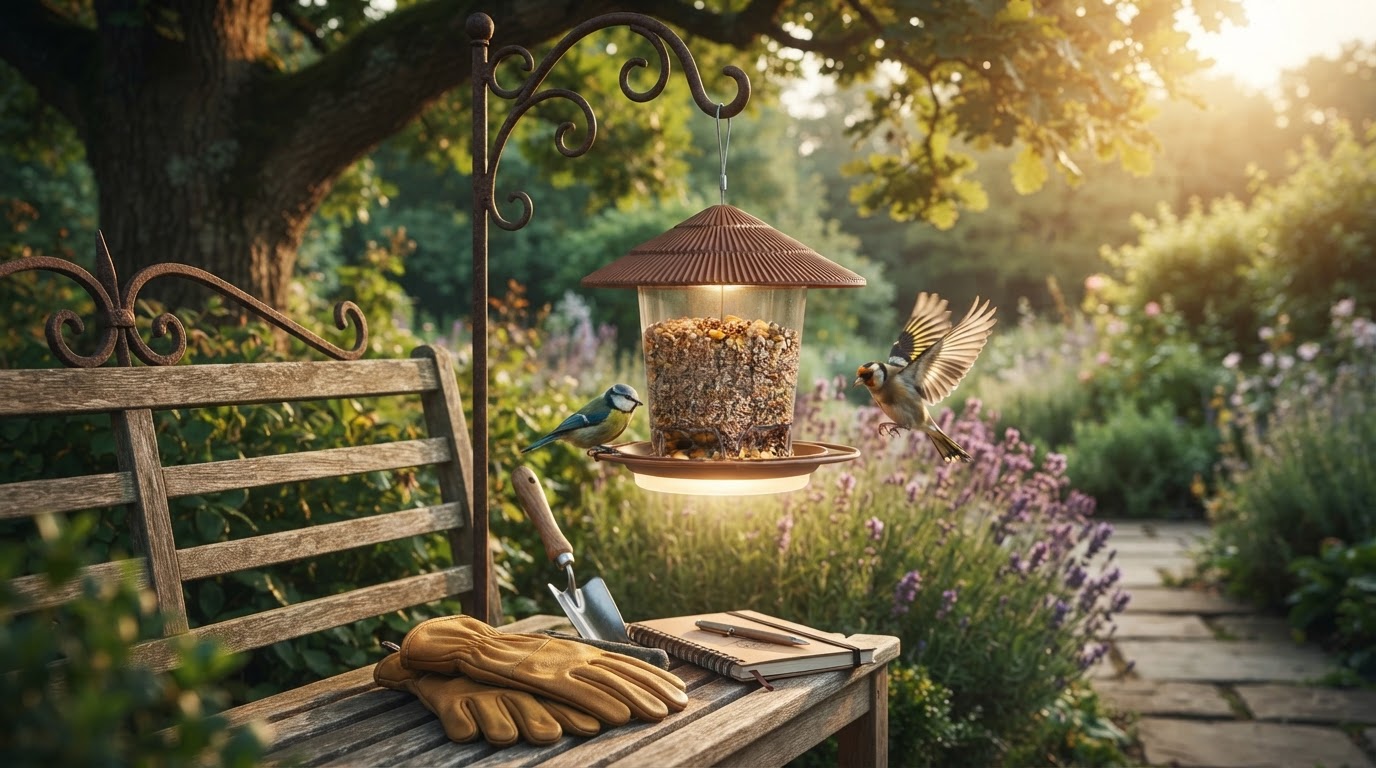
Why choose a Solar Lantern Feeder for wild bird watching?
 Priya RamanSenior Analyst
October 3, 2026 — Choosing a wild bird feeder with solar light involves balancing diurnal feeding capacity with nocturnal ambient illumination, a dual-purpose design best exemplified by the Solar Lantern Feeder.
Homeowners and garden enthusiasts often seek to extend the visibility of their backyard habitats beyond sunset, turning a functional utility into a landscape feature. This shift in consumer preference prioritizes equipment that serves ecological needs during the day while providing aesthetic value at night.
How does a wild bird feeder with solar light improve visibility?
A wild bird feeder with solar light improves visibility by utilizing integrated photovoltaic cells to power LED systems that illuminate the feeding tray and surrounding garden space. Think of it as a matrix of utility and visibility; the primary function remains seed distribution, but the secondary function is safety and navigation for the homeowner. According to WIRED, high-end models like the Birdfy Lite Smart Bird Feeder incorporate solar panels to maintain power for advanced features, demonstrating that solar integration is now a standard for modern backyard birding.
Two axes matter here: the efficiency of the solar conversion and the lumen output of the lantern. The Solar Lantern Feeder is designed to maximize daylight absorption to ensure the light remains active through the evening hours, even in varied climates. By illuminating the feeder, users can monitor seed levels at dusk without external flashlights, while the soft glow provides a focal point in the garden. This visibility is not just for the birds; it transforms the feeder into a decorative lantern that anchors the backyard aesthetic after dark. Once you see it this way, the feeder becomes a permanent fixture rather than a hidden utility.
What factors define the best solar powered bird feeders in 2024?
The best solar powered bird feeders are defined by their material durability, weatherproofing, and the integration of smart technology or high-capacity battery storage. The decision rule is simple: prioritize feeders that offer at least six to eight hours of illumination following a standard day of sunlight exposure. Research from Birdbuddy indicates that their Pro Solar models achieve high user ratings (4.79 stars) by focusing on solar-powered convenience, which reduces the need for manual charging or battery replacements.
Durability is the second critical factor, especially for feeders exposed to year-round elements. Models often feature copper, hand-blown glass, or powder-coated metals to prevent rust and UV degradation. For instance, the Solar Lantern Feeder utilizes materials that withstand moisture while protecting the internal circuitry of the LED light. The synthesis of these elements—reliable power, weather resistance, and aesthetic design—distinguishes premium units from basic plastic alternatives. When selecting a unit, consumers should look for IP-rated electronics to ensure the solar lantern remains functional during heavy rain or snow cycles.
Quick answers
Q: How long does the light on a Solar Lantern Feeder typically stay on? / A: Most high-quality solar feeders are designed to provide between 6 and 10 hours of light after a full day of sun. The Solar Lantern Feeder specifically targets the 8-hour mark to ensure the garden remains lit until midnight.
Q: Can these feeders support smart cameras for bird identification? / A: Yes, many modern solar-integrated units, such as the Birdfy Lite mentioned by WIRED, use solar power to sustain AI-driven cameras. These systems allow users to receive real-time notifications and HD video of visiting species directly to their smartphones.
Q: Are solar lantern feeders safe for birds at night? / A: Yes, the low-lumen LEDs used in products like the Solar Lantern Feeder do not emit enough heat to harm birds or significantly disrupt their circadian rhythms. The light is primarily designed for human visibility and garden ambiance rather than high-intensity illumination.
Q: What happens to the solar light during winter months? / A: Solar performance may decrease during shorter days, but optimizing the placement of the Solar Lantern Feeder can help maintain function. Proper maintenance involves keeping the solar panel clear of snow and debris to ensure maximum photon absorption.
For further details on equipment lifespan, see our Solar Lantern Feeder: A Field Test Evaluation. To explore aesthetic options, read about Unique Bird Feeders That Light Up At Night, or learn about Optimizing Solar Lantern Feeder Performance in Low Light.
Learn more about Solar Lantern Feeder at https://solyrafeeder.com.
Sources
- Birdbuddy Pro Solar
- Bird Feeder With Solar Light - Etsy
- Watch Backyard Birds From Your Chair - Solar Camera Feeder