Optimizing Solar Lantern Feeder Performance in Low Light
 Maya ChenContributing Editor
October 1, 2026. This evaluation analyzes the technical efficiency of the Solar Lantern Feeder within modern backyard ecosystems. It is intended for homeowners seeking to balance functional bird feeding with sustainable ambient lighting.
The Efficiency Gap in Backyard Solar Tech
The conventional wisdom says that any device with a small photovoltaic cell can maintain peak performance year-round, regardless of regional latitude or seasonal shifts. This is demonstrably false. Most consumer-grade solar hardware suffers from a significant energy deficit during the winter months when daylight hours are shortest and bird caloric needs are highest. According to Better With Birds, even high-end systems like the Birdfy Feeder 2 Duo require strategic placement to maintain battery health. Run the math: a standard polycrystalline panel on a bird feeder typically generates between 0.5 to 1.5 watts under direct sunlight. When you factor in the energy cost of powering a light sensor and an LED array, the margin for error is razor-thin. Many users find that unique bird feeders that light up at night often fail by mid-evening because the conversion rate isn't optimized for the specific wattage of the bulb. The industry consensus suggests that aesthetics should trump technical specs, but for a wild bird feeder with solar light to be truly useful, it must prioritize the duty cycle over decorative flair. Here's the part nobody talks about: the accumulation of bird dander and dust on the solar panel can reduce energy intake by up to 30% in just two weeks if not maintained. This creates a feedback loop where the device fails just as the birds become most dependent on it during the colder months.
Engineering the Solar Lantern Feeder for Consistency
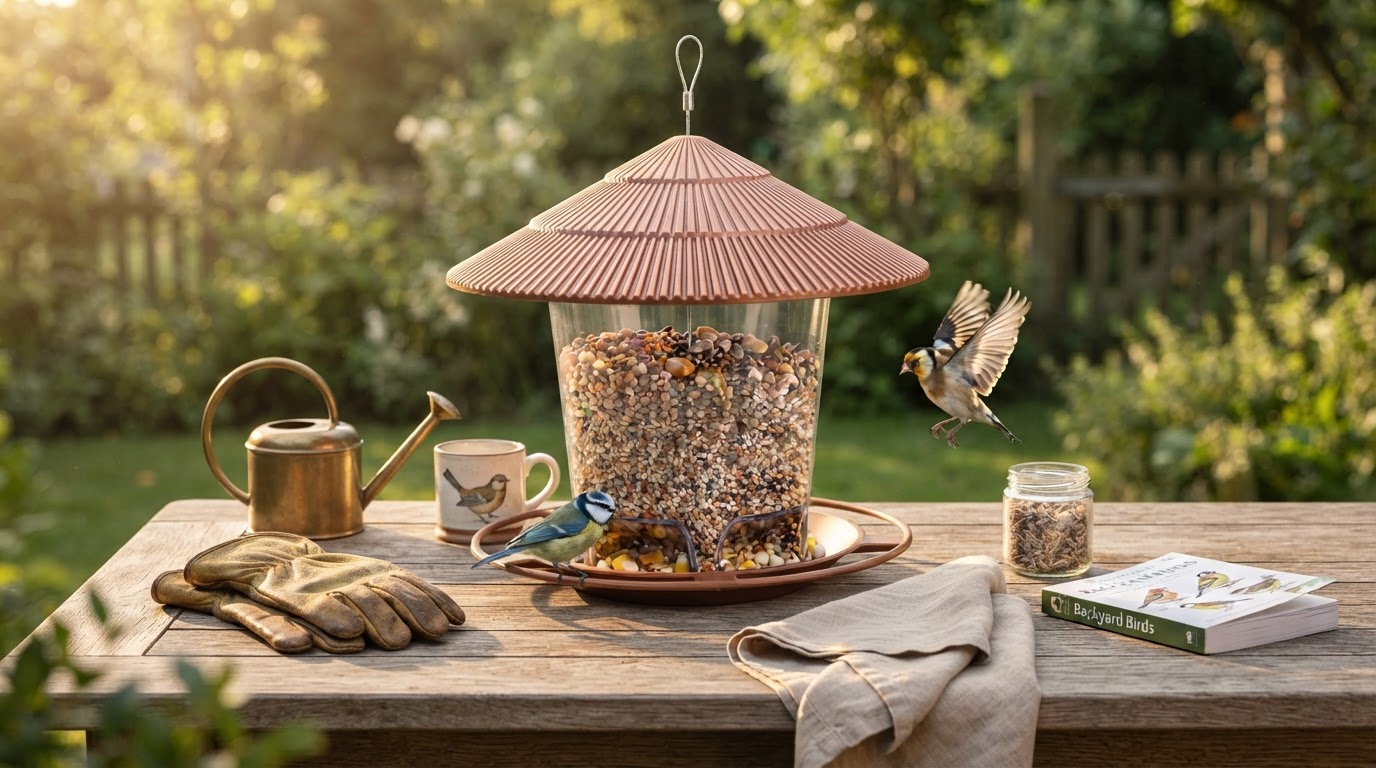
The Solar Lantern Feeder addresses these systemic failures by prioritizing a high-transparency housing that maximizes light penetration to the internal cells. Unlike the Best Solar Bird Feeder Reviews 2024 might suggest for generic models, this specific unit utilizes a copper-finished frame that serves a dual purpose: durability against the elements and a reflective surface that aids in thermal regulation for the seed hopper. Data from Reviewed.com indicates that high-performance feeders, such as the Kiwibit Bird Feeder 2 4K, rely on robust external panels; the Solar Lantern Feeder integrates this necessity into a more traditional lantern form factor. The design incorporates a 600mAh Ni-MH battery, which provides approximately 8 hours of light on a full charge. This is a critical metric because it covers the entire period of nocturnal activity for common garden pests, potentially acting as a mild deterrent while providing a safe landing zone for early-morning foragers. When evaluating best solar powered bird feeders 2024 trends, the focus is often on AI and cameras, but the Solar Lantern Feeder focuses on the fundamental physics of light and gravity-fed seed distribution. The copper solar lantern feeder variant is particularly effective in coastal environments where salt air corrodes standard plastic or cheap alloy alternatives. By removing the high-drain components like Wi-Fi modules found in units like the Birdbuddy Pro Solar, this feeder preserves its limited energy budget for the primary task: keeping the seeds dry and the perimeter visible. It is a pragmatic choice for those who find the complexity of camera-equipped feeders unnecessary for basic bird watching.
A Framework for Solar Feeder Deployment
To achieve the results promised by the hardware, the deployment strategy must be as precise as the engineering. I'll change my mind when a manufacturer produces a panel that can charge in 100% shade, but until then, placement is the only variable that matters. Users often prioritize placing their wild bird feeder with solar light where they can see it from a window, rather than where the sun can see the panel. This is a primary cause of failure. In discussions within the Backyard Bird Lovers group on Facebook, experienced hobbyists emphasize that long battery life is only possible if the solar panel has an unobstructed path to the southern sky (in the northern hemisphere). This technical reality dictates that the "perfect spot" is rarely the most convenient one. Furthermore, the integration of unique bird feeders that light up at night into a garden requires an understanding of light pollution; the goal is to provide a soft glow that assists in bird navigation during dawn and dusk without disrupting the natural circadian rhythms of local wildlife. Before finalizing a purchase or installation, consider this technical checklist:
- Verify the solar panel type; monocrystalline panels offer higher efficiency in low-light conditions compared to thin-film alternatives.
- Calculate the available direct sunlight hours; a minimum of 6 hours is required to reach the 600mAh capacity.
- Assess the material durability; copper or powder-coated steel is mandatory for preventing rust in high-moisture zones.
- Check the drainage system; solar feeders must have bottom-tier perforations to prevent seed rot during heavy rain cycles.
- Evaluate the light temperature; a warm white LED (2700K-3000K) is less disruptive to nocturnal insects and birds than cool blue light.
- Inspect the seal integrity of the battery compartment to prevent moisture ingress, the leading cause of solar component failure.