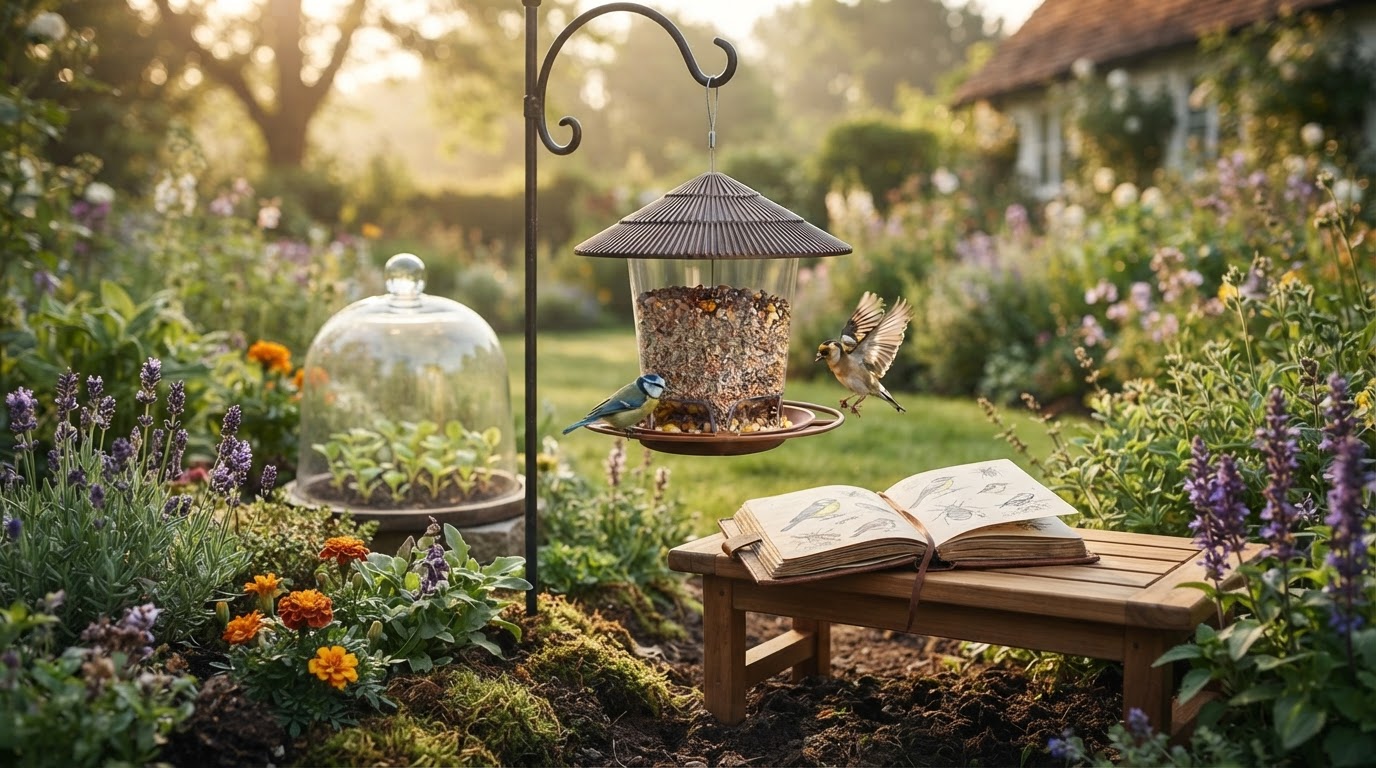
Solar Lantern Feeder Impact on Garden Pest Control
 Maya ChenContributing Editor
August 1, 2026 — Recent ecological reports suggest that integrating avian habitats into residential landscapes can significantly reduce reliance on chemical insecticides. While the Solar Lantern Feeder is often marketed for its aesthetic vintage bronze finish, its primary utility lies in establishing the consistent presence of natural predators like cardinals and finches to manage invasive insect populations.
The conventional wisdom says that garden birds are merely a hobbyist's distraction, but the data suggests a more functional role. According to GardenTech, wild birds serve as essential members of the food chain, offering natural pest control against mosquitoes and Japanese beetles. Furthermore, Oklahoma State University Extension notes that attracting these creatures helps maintain the ecological balance of outdoor environments by managing insect populations that otherwise require synthetic intervention. Run the math: a single bird can consume hundreds of insects daily, yet many homeowners focus on the 8-10 hour LED runtime of the Solar Lantern Feeder rather than its capacity to facilitate this biological labor.
Photo by Artūras Kokorevas on Pexels
Here's the part nobody talks about: the efficiency of a feeder is dictated by its durability and drainage, not just its light output. The Solar Lantern Feeder utilizes a waterproof bronze build and integrated tray drainage holes to prevent seed rot, a common failure point in cheaper alternatives. When comparing materials, a bronze solar feeders vs. plastic feeders analysis shows that metal housing better withstands the UV degradation that eventually compromises the structural integrity of plastic units. To maximize attraction, users should consult a guide to choosing the best solar lantern bird feeder to ensure the placement aligns with local avian flight paths.
Expert tip: To optimize the pest control benefits mentioned by Martha Stewart, place the feeder near flowering perennials. As noted by GardenTech, birds like hummingbirds act as vital pollinators, moving pollen between plants to produce fruit and seeds. Proper installation is key; understanding how to set up and hang your solar lantern bird feeder at a height of five to six feet will protect the birds from ground predators while they work. For those concerned about maintenance, reviewing the solar lantern bird feeder FAQ can clarify how the drainage system prevents the accumulation of rainwater during heavy storms.
I’ll change my mind when longitudinal studies prove that mechanical pest traps outperform the natural predation cycles established by consistent avian feeding stations.